NewsAquila ran the first family-law ad on ChatGPT, before the platform allowed legal-services ads.Read the story →
Aquila

Be the estate firm that advisors, CPAs, and AI answers send high-value clients to

Business owners planning an exit, blended families, physicians, and successor trustees rarely type their situation into Google. They ask their financial advisor, their CPA, another lawyer, or ChatGPT. As your Fractional CMO, I build the marketing that puts your firm in those answers, and the tracking that shows you which ones send clients.

estate-planning firms' homepages we reviewed showed a page or menu item for financial advisors or CPAs

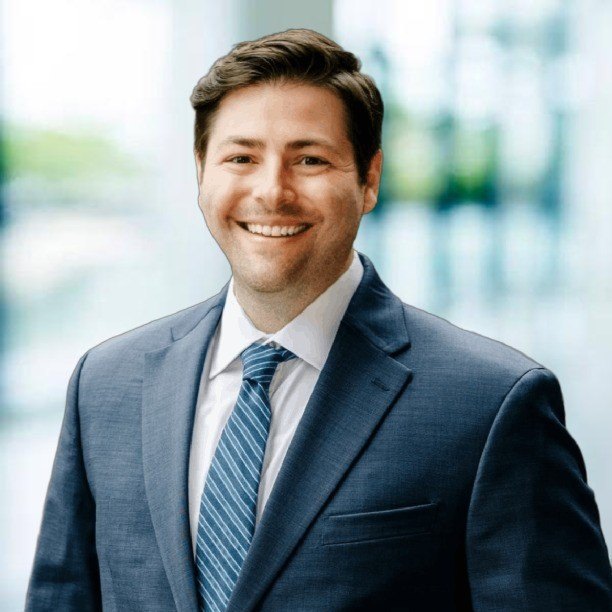
Joshua David Little

I'm Joshua David Little. I've run my own consulting firm since 2004, I've helped attorneys prepare complex cases for trial, and I ran the first family-law ad on ChatGPT, before the platform allowed legal-services ads.

About Joshua →

/ What estate firms are up against

The clients you want arrive through other people, and that part rarely gets a plan

Just over 4 million Americans hold between $5 million and $100 million.¹ For their families, estate planning means a business that has to change hands, a second marriage with children on both sides, an adult child who depends on benefits, a medical practice that could be sued, or a trust that a son or daughter has to administer after a parent dies. Those clients come to a firm through an advisor, a CPA, another lawyer, a former client, and now an AI answer as well. The firms that win them are the ones those sources can easily point to.

Referrals with no system

A referral business with no system behind it

Many estate lawyers will tell you their book was built on relationships. Yet a firm can run on referrals for years without knowing which clients came through them, or from whom. I've talked with the owner of a firm with a growing estate practice who wanted more business owners moving into trust work and had no numbers on how often it happened, because his firm wasn't recording where clients came from.

Free resourceTrace your last 20 clients

Advisors moving in

Advisors are offering the plan themselves

On Facebook and Instagram, of about 27 ads on the first screen of results for "estate tax planning," three came from law firms. Most of the others were wealth managers selling tax, investment, and estate planning as one package, and one told readers outright that their attorney drafted their documents years ago.² The firm that becomes the advisor's legal partner keeps the work.

Working with financial advisors and CPAs
AI answers

The AI names the firm that wrote for that client

When we asked Google's AI and ChatGPT about high-value situations, the firms they named usually had a page written for that exact person: the business owner, the physician, the trustee. A homepage that lists every service gives the AI very little to match.

/ What their clients search, and what AI tells them

High-value clients look up the tool, then ask someone they trust

The situations themselves are small searches. In a month in the US, "estate planning for high net worth" gets about 390 searches, "business succession planning attorney" 320, and "estate planning for blended families" 720. The names of the tools are far bigger: "charitable remainder trust" gets about 60,500 and "irrevocable trust" 40,500, often from people trying to understand them, judging by the low bids.³ Successor trustees and beneficiaries search more directly, with "trust administration attorney" at about 1,300 and "trust litigation attorney" at 2,900.

When those people ask an AI, the answer usually describes a team: an estate lawyer, a CPA, a financial advisor, and sometimes an exit planner or a valuation professional. In three of the ten cities, an answer sent them back to the people around them. Gemini told a client with $20 million whose advisor had suggested a trust to ask "if they have a preferred roster of estate attorneys they routinely collaborate with." ChatGPT told a successor trustee to ask "your father's CPA or financial advisor for a recommendation."

The firms the answers named usually had a page for the situation the person described. ChatGPT named firms for all 10 of the high-value questions we asked. Google's AI named none for 4 of them, which leaves room for the firm that writes the page first.

And the clients who do hire you are bringing the AI along. Partners at one Chicago private-wealth firm wrote that clients now come back having put their lawyer's advice into an AI, which disagreed.⁵ A firm that has already answered those questions in writing gives the client something better to compare.

/ Which firms the AI named

The firms named had something written for that exact reader

A page for the situation

ChatGPT named firms for a business-succession page in Charlotte and for trust-litigation pages in Seattle. In Phoenix, Google's AI named a firm for an article written for the state's physicians, though its homepage had no physician page and the firm had never run a Google ad.

Credentials at the top end

For the largest estates, the answers named partners at large firms and the boutiques that compete with them, cited to their bio pages and to national rankings or a professional fellowship. A bio page that states those credentials gives the AI something to cite.

What the homepages showed. On the homepages and menus of 14 estate-planning firms in 11 states, mostly firms the AI had named, 4 showed a page for high-net-worth clients, 5 for business owners, 2 for blended families, and none for advisors or CPAs. Only 1 homepage named a lawyer's credential. Five of the 9 firms whose ad history we checked had never run a Google ad, including the three Google's AI named for the New York business owner and the Phoenix surgeon, so the AI named them without any ad spend behind them.

/ Where the effort goes

For high-value estate work, most of the effort goes into people and pages

How

How each step looks for an estate-planning firm: A guide for each situation your firm wants more of, such as the business owner planning an exit, the second marriage, or the successor trustee in the first weeks. A way to sign up on every page and in every talk. Follow-up that stays useful, including a reason for past clients to come back when their plan is out of date: in one 2026 survey of high-net-worth people, 73% of those with a plan weren't updating it.⁴ Testing every month. And a record of where each client came from, referral partners included.

A useful resource offered first is the heart of it. Across three client firms and four search campaigns, ads that offered a free guide instead of asking for a consultation converted at 14.1%, where legal search ads average 5.55%.⁶

Read the case study

FAQ

Will this work for my practice area?

The system is based on best practices that work across industries, so it adapts to any practice area with customized resources and messaging for your specific clients.

Our clients come from referrals. Why would we need marketing?

Because referrals are the marketing, and they're the part most worth building on purpose. The work starts by finding out who sends you clients today, then gives those people something useful to pass along, makes sure your firm shows up when their clients look you up or ask an AI, and records each referral so you can see which relationships are growing. The goal is more of the clients you already get through referrals, from more of the people who could be sending them.

Won't financial advisors see us as competition?

Some already worry that you'll take their client, the same way some lawyers worry an advisor will give legal advice. Material that helps an advisor serve their own client, with your firm's name on it, is the gentlest way through that.

Working with financial advisors and CPAs
We use our network's documents and marketing. Can you work with that?

Yes. Your drafting system can stay as it is. What we build sits on top of it: your firm's own pages, your lawyers' own experience, and the situations you handle, so your firm stops looking like every other member.

I don't like marketing. How much of my time does this take?

Not much. You give input at the start, review the key pieces we create, and spend time with your referral partners, which stays with you. In my experience, most clients spend 2 to 3 hours a month on strategy calls, recording video, and reviewing content. If someone on your staff has been handling the marketing, I'll train them and lead them, so it stops landing on your desk.

Free resourceA marketing plan for a lawyer who hates marketing

Do you work with firms that handle elder law and special needs?

Yes. Elder law has its own page, including special-needs planning and financial-exploitation cases.

Marketing for elder-law firms
Are we locked in?

No. There's no long-term lock-in, and we set the scope together after your assessment.

¹ UBS Global Wealth Report 2026, data for year-end 2025, as reported by Financial Planning: just over 4 million Americans with $5 million to $100 million.

² A wealth manager's ad on Facebook and Instagram, first screen of results for "estate tax planning."

³ Google Ads Keyword Planner, US, average monthly searches and top-of-page bids.

⁴ Long Angle, a members' community for high-net-worth people, 2026: of 233 members with $2 million to $100 million or more, 82% have a plan, and 73% of those aren't updating it.

⁵ Three partners of a Chicago-based private-wealth firm, Trusts & Estates.

⁶ LOCALiQ, 2026 search advertising benchmarks: attorneys and legal services average a 5.55% conversion rate.

Find out where your high-value clients really come from

A 45-minute to one-hour video call with me. We map your firm's marketing together on a whiteboard, including where your clients come from today and whether ChatGPT and Google's AI name your firm, and you keep the map whether or not we work together.

Aquila's own research: AI answers to 10 high-value estate questions in 10 US cities from Google's AI, ChatGPT, and Gemini, and a review of 14 estate-planning firms' homepages in 11 states.

Get my strategic marketing assessment

Currently accepting a limited number of Fractional CMO relationships.