The entry price can run to six figures
Some marketers won't talk to a firm that can't put in something like $100,000, by one Florida injury lawyer's account.² Some vendors publish $25,000 minimums.¹
Mass tort is a national business run on bought attention and outside money. Before your firm puts money into it, you should know what you'd stake, when you'd see it back, and which part of the work your own marketing can do better than a vendor. As your Fractional CMO, I help you decide, and then build the side of it that's yours.
From about $350 to the low five figures for each signed case, in prices vendors have published or relayed¹
Work out what you'd stake →
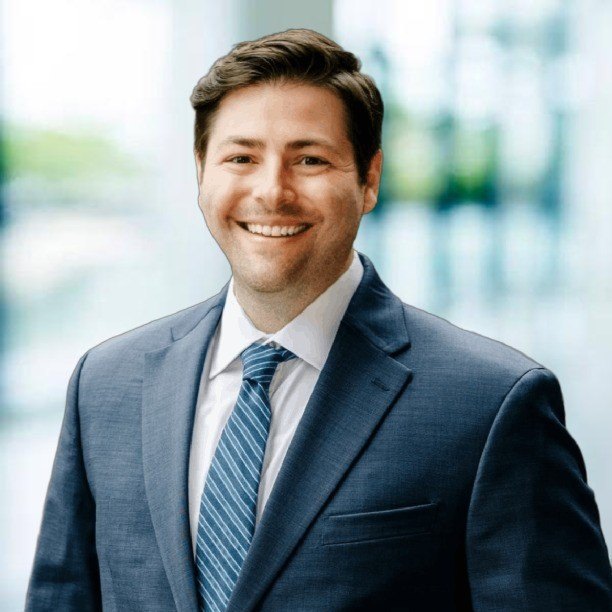
I'm Joshua David Little. I've run my own consulting firm since 2004, I've helped attorneys prepare complex cases for trial, and I ran the first family-law ad on ChatGPT, before the platform allowed legal-services ads.
Many of the people who sign in a mass tort are found through TV, Facebook, and companies that sell leads and signed cases. A firm that buys pays for each case at the start and waits years for a settlement. When mass tort lawyers, vendors, and lenders talk in public, the talk is mostly about cost, bad vendors, referral relationships, losing touch with clients, and debt, and little about finding more cases.
Some marketers won't talk to a firm that can't put in something like $100,000, by one Florida injury lawyer's account.² Some vendors publish $25,000 minimums.¹
One Alabama plaintiffs' attorney told Bloomberg that most lead vendors are bad, and their leads only look valuable.³ After an audit, one Texas firm held back all its claims, in every tort, until an independent review could check them.
The longer a tort runs, the more each case costs to get.⁴
You send the cases you sign to a firm that runs the litigation, and your firm shares in the fee on terms your lawyers agree. You put less money in up front, you're paid years later, and your name rides on how that firm treats your client.
You take on part of the work and part of the cost. You keep more control and more of the fee, and you carry more of the risk and more of the wait.
It's a real answer, and for some PI firms the right one. You can still help the people who call you by sending them to a firm you trust, and keep your marketing on the cases you want to build your firm on.
Before you buy anything, look at what's already coming in. Past clients, your website, and your own ads already bring some of these calls. As one mass tort conference organizer tells PI firms, some of those clients are probably already in your contacts.⁵ A plan for them can cost far less than a vendor's minimum.
Small firms often start with the biggest names and then wonder whether a firm that size will care about them at all.² What we look at is the business side: how each firm will keep your clients informed, how it will report back to you, and what each choice is likely to cost you over the life of a case.
Large numbers of people search for the lawsuits themselves. Google's top-of-page bid estimates on most drug and device lawsuit searches are a few dollars; mesothelioma attorney, the one real bidding war on Google here, runs about $120 to $290 at the top of the page.⁶ Many people follow the case, too: for firefighting foam, the search for a lawsuit update outnumbers the search for the lawsuit.⁶
On Facebook the picture is different. On the first screen of Meta's Ad Library for four torts, about 69 of the 83 legal ads came from advertisers whose names don't read as law firms.
When we asked Google's AI the questions claimants ask, such as whether they qualify or whether a lawsuit is a scam, it usually drew on firms' own tort pages and lead-information pages as its sources, and named firms as picks only when asked for the best lawyer or how to join. A clear page on your firm's site that answers "Do I qualify?" and "Is this real?" gives the AI something to draw on.
Our work in mass tort is on your firm's side: the decision, your own pages and list, your intake team, and the true cost of every source.
The Florida lawyer looks for new torts, because those cases are cheaper to get.² When a new tort appears, the first clear pages explaining it, and who may qualify, go up before the ads crowd in.
Every docket ends. When yours settles or is dismissed, the pages, the ads, and the emails pointed at it should change the same week, so nobody signs up for a case that's closed.
Part of what we do is build your firm's email list: past clients, newsletter readers, and people who signed up for a resource on your site. They already know you and asked to hear from you. Keeping them informed about the torts your firm handles, in the email they signed up for, is marketing you own.
Women in the women's-health torts, parents of harmed children, workers exposed on the job, and families facing mesothelioma each search, ask, and decide differently. Each gets pages written for them.
For some firms, an educational site apart from the firm can reach people earlier, found by people who come to it on their own through search, AI answers, or an ad for the resource itself. I took that approach with the first family-law ad on ChatGPT, which promoted an educational resource.
Offering a resource first is what this system is built on. Across three client firms and four search campaigns, ads that offered a free resource instead of a consultation converted at 14.1%, against a 5.55% average for legal search ads.⁷
The Florida lawyer's rule is that if you don't call someone back within a minute, they're gone.² Drug and device cases also need proof of use and proof of injury before they're worth anything. We find where qualified callers are lost between the first contact and the signed engagement, train your intake and sales team to sign more of them, and measure every source all the way to the signed case, so you can see which sources are worth what you pay.
Many firms borrow to fund cases that take years, and the longer cases run, the more of them refinance.⁸ When the money is borrowed, a firm needs to know its real cost per signed case, by source, after the cases that fall out are counted, and how that cost moves as the tort ages.
How each step looks for a mass tort firm: For a PI firm in mass tort, the resources answer "Do I qualify?" and "Is this real?" for your firm's own torts, the capture runs on pages people find themselves, the follow-up keeps signed clients informed through a long wait, and the tracking counts the cost of each signed case by source as the tort ages.
The system is based on best practices that work across industries, so it adapts to any practice area with customized resources and messaging for your specific clients.
Maybe. For some PI firms the answer is no. It depends on how much you can put in up front, how long you can wait, what you already have coming in, and whether a firm you trust will take the cases you sign. The assessment puts those numbers side by side so you can decide.
We build the pages, resources, intake training, and tracking that lower the cost of the cases you choose to take.
Ask what a signed case costs once the duplicates, the unqualified, and the drop-outs are counted, and compare that with your other sources.
Yes, as one channel among your others. I ran the first family-law ad on ChatGPT, before the platform allowed legal-services ads. For a mass tort firm, the ads would promote your firm's own resource on the questions people ask about a lawsuit, and we'd judge them per signed case, the same way as every other source.
It depends on what your firm needs and how much of the work we take on. We set the scope together after your assessment, and you're never locked into a long-term contract.
¹ Prices for a signed case quoted by companies that sell cases or leads, relayed by a plaintiff firm's blog and an agency's pages: about $350 to $750 for GLP-1 drug cases in 2024, up to the low five figures for PFAS injuries; two vendors list $25,000 minimums.
² A Florida PI attorney who refers out his mass tort work, on a podcast for injury-firm owners, 2025 and 2026.
³ Bloomberg, republished by Insurance Journal, October 31, 2023.
⁴ Bloomberg Law, January 30, 2023.
⁵ An organizer of a mass tort conference, on the same podcast, 2025.
⁶ Google Ads Keyword Planner, US, top-of-page bid estimates and average monthly searches.
⁷ LOCALiQ, 2026 search advertising benchmarks: attorneys and legal services average a 5.55% conversion rate.
A 45-minute to one-hour video call with me. We map your firm's marketing together on a whiteboard, including what's already coming in and what you'd stake, and you keep the map whether or not we work together.
Currently accepting a limited number of Fractional CMO relationships.